“Export Volume” search results (400)
African specialty coffee Angola boutique coffee beans
Angolan coffee Angola Angola has been growing coffee for more than 100 years, and its output has been the first in Africa until 1960, reaching 225000 tons in 1979, ranking second in Africa and fourth in the world. The output in 1992 was 5000 tons. Sisal production is second only to coffee, and the level of per unit yield is higher. In 1986, the output reached 20,000 tons, sisal ranked second in Africa both in terms of output and export volume.
2014-07-22 Price of African coffee beans Angola coffee beans
Introduction to coffee bean producing areas-- South America Peruvian boutique coffee Peruvian coffee characteristics Peruvian coffee mouth
Well-known representative coffee: Peru (Peru) Peru is one of the major coffee producing countries in South America, and coffee is Peru's largest export agricultural product, which has grown greatly in recent years. It can be seen from the map that the Andes mountains run parallel to the coast in Peru. More than 90% of Peruvian coffee is grown in the north, in the valleys east of the capital Lima, and in the slopes of the Andes.
2016-03-28 Coffee beans producing areas introduction South America Peru boutique coffee characteristics well-known generation
Coffee bean producing area-South America Peruvian Coffee introduction Peruvian Coffee producing area Peruvian Coffee characteristics Peru
Peru is one of the major coffee producers in South America, and coffee is Peru's largest export of agricultural products, which has grown significantly in recent years. It can be seen from the map that the Andes mountains run parallel to the coast in Peru. More than 90% of Peruvian coffee is grown in the north, in valleys east of the capital Lima, and in forest areas on the slopes of the Andes. Peruvian coffee beans are round
2016-03-23 Coffee beans producing areas South America Peru Coffee introduction Origin characteristics South
Acidity and texture of Ethiopian Fine Coffee Bean Flavor and Taste Manor
35% of the coffee is courtyard coffee. In this kind of coffee garden, the planting is three-dimensional. Coffee is located in the lower layer and gets a suitable growth environment in the shade of other crops. Fertilizers are mainly fallen leaves, withered grass and animal manure. 5% of the coffee belongs to plantation coffee. This is a modern way of growing coffee, which is also grown in forests, but uses new varieties and works with others.
2016-08-05 Acidity texture Ethiopia boutique coffee beans flavor taste manor producing area
Common sense of Coffee Culture Coffee History of Laos
Coffee in Laos has gone through a lot of development in the past 20 years. The speed of development in the past 20 years is faster than that in the past 80 years. The coffee history of Laos can be traced back to 100 years ago. At that time, France was the colonial ruler of Vietnam, Cambodia and Laos, and they began to experiment with growing various crops in these areas. Coffee was quickly found in farmers in Vietnam and Laos.
2014-12-16 Coffee culture common sense Laos coffee history past 20 years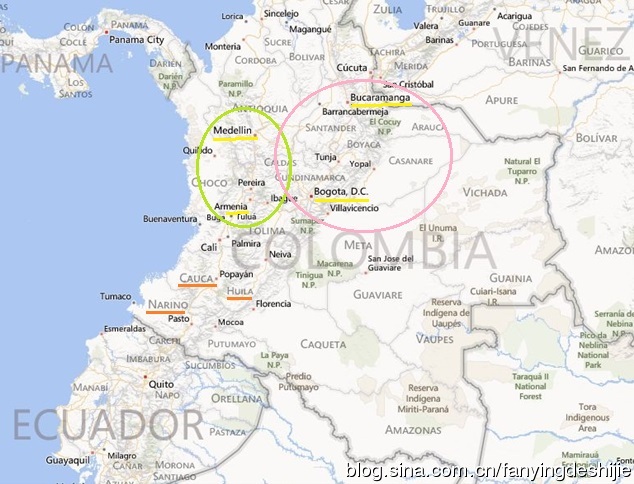
An introduction to the coffee-producing areas of the world; a detailed introduction of the coffee-producing country of Colombia
Photo 1: traditional producing areas: central MAM Eastern producing areas common boutique producing areas: Huila,Narino,Cauca in the 16th century, Jesus missionaries brought coffee to Colombia. Colombian coffee went abroad for the first time in 1835, when the export volume was only 2000 bags. Today, Colombia exports millions of coffee. Although in the ranking of total global coffee production,
2015-12-18 World Coffee Manor producing area introduction country of production Colombia details
South Korea is the largest exporter of Yunnan coffee
According to the Yunnan Coffee Association, South Korea imports an average of 2000 tons of coffee from Yunnan every year, making it the largest exporter of coffee from Yunnan. Yunnan Province has a coffee planting area of more than 800,000 mu, with an annual output of more than 60,000 tons, accounting for 98% of the country's total. The products are sold in 31 countries and regions, including the United States, South Korea and Southeast Asia, among which South Korea has become the largest exporter of Yunnan coffee because of its market and tariff advantages.
2014-07-16 Coffee News Yunnan Coffee Export Korean Coffee
Blue Mountain Coffee Top Blue Mountain Coffee of Jamaica (2)
At a Blue Mountain coffee processing plant for tourists, the commentator revealed to reporters the secret of why Blue Mountain coffee tastes pure: their coffee trees are on rugged hillsides, and the picking process is very difficult. Non-local skilled female workers are simply incompetent. It is very important to choose the right ripe coffee beans when picking. Immature or fully ripe coffee will affect the coffee.
2014-12-28 Blue Mountain Coffee Jamaica Top one designed for sightseeing tourists start-up
The export of Ethiopian coffee knows the main producing areas of Ethiopian coffee.
Coffee export coffee is Ethiopia's most important export cash crop and the main source of Ethiopia's foreign exchange earnings. Ethiopia's coffee exports account for about 3% of the world market, making it the eighth largest coffee exporter in the world. Coffee exports increased steadily from 58000 tons in 1990 to 110000 tons in 1995-1996 and remained at this level in the following years. two
2016-05-14 Ethel Searle Biya Coffee Export understanding main producing area
Ethiopian Coffee Flavor and taste Flavor Manor introduces boutique coffee beans
Due to different processing methods, coffee can be divided into washed coffee (Washed coffee) and sun-cured coffee (Sun-dried coffee). Washed coffee accounts for 35% of exports. Good quality washed coffee is processed with freshly picked fully ripe fruit, picked carefully and closely monitored by professionals. The clean coffee beans picked up will be pulped on the day of picking.
2016-07-19 Ethiopia coffee flavor taste manor producing area introduction boutique coffee beans
Ethiopian coffee flavor manor area with nut flavor
In Ethiopia, the grading and quality control system of coffee is divided into three levels: producer, regional and national. All coffee is inspected by local inspection agencies before leaving the country of origin, and then re-tested at the coffee inspection and grading centers in Addis and Diredawa to determine its quality grade. Coffee is graded before auction and sale, for all involved in production, acquisition,
2016-07-14 Nuts aroma Ethiopia coffee flavor taste manor producing area
The coffee culture of Asia Laos coffee is also unique.
Coffee in Laos has gone through a lot of development in the past 20 years. The speed of development in the past 20 years is faster than that in the past 80 years. The coffee history of Laos can be traced back to 100 years ago. At that time, France was the colonial ruler of Vietnam, Cambodia and Laos, and they began to experiment with growing various crops in these areas. Coffee was quickly found in farmers in Vietnam and Laos.
2015-02-05 Asia coffee culture Laos coffee there are also unique in the past 20 years to
The relationship between Kenyan coffee and Arabica coffee beans
In Ethiopia, the grading and quality control system of coffee is divided into three levels: producer, regional and national. All coffee is inspected by local inspection agencies before leaving the country of origin, and then re-tested at the coffee inspection and grading centers in Addis and Diredawa to determine its quality grade. Coffee is graded before auction and sale, for all involved in production, acquisition,
2016-06-13 Ethiopia Yega Sheffield Coffee Kenya Rabbi Coffee beans relationship
Citrus flavor Ethiopian coffee grind characteristics Variety flavor description
In Ethiopia, coffee classification and quality control systems are divided into producer, regional and national levels. All coffees are inspected by local inspection agencies before they leave the country of origin, and then re-inspected at coffee inspection and grading centres in Addis and Diredova to determine their quality grade. Coffee is graded prior to auction and sale, and all participants in production, acquisition,
2016-10-09 Citrus Ethiopian Coffee Ground Characteristics Variety Region Flavor Description
Introduction to the Flavor characteristics of Ethiopian Yega Xuefei Coffee
In Ethiopia, the grading and quality control system of coffee is divided into three levels: producer, regional and national. All coffee is inspected by local inspection agencies before leaving the country of origin, and then re-tested at the coffee inspection and grading centers in Addis and Diredawa to determine its quality grade. Coffee is graded before auction and sale, for all involved in production, acquisition,
2016-06-15 Ethiopia Yega Chevy Coffee Flavor characteristics introduction
The journey of coffee from Africa to China
Coffee originated in Africa and little is known about it. In fact, Africa Ethiopia is the hometown of coffee, producing the best Arabian coffee in the world. Soil, weather conditions and an altitude of more than 2000 meters above sea level have made many countries in Africa create an ideal scene for the growth of coffee. At present, coffee production in Africa accounts for about 13% of the world's total output, and coffee income is part of Africa.
2015-09-08 Coffee Africa to China Journey
The production of Angolan coffee beans ranked first in Africa until 1960.
Angola's Angola, which has been growing coffee for more than 100 years, ranked first in Africa until 1960 and reached 225000 tons in 1979, ranking second in Africa and fourth in the world. The output in 1992 was 5000 tons. Sisal production is second only to coffee, and the level of per unit yield is higher. In 1986, the output reached 20,000 tons, sisal ranked second in Africa both in terms of output and export volume. Luo'an, Xinhuanet
2015-04-17 Angola coffee beans production 1960 years ago always Africa number one
An introduction to the characteristics of Ethiopian Coffee Flavor Manor
In Ethiopia, the grading and quality control system of coffee is divided into three levels: producer, regional and national. All coffee is inspected by local inspection agencies before leaving the country of origin, and then re-tested at the coffee inspection and grading centers in Addis and Diredawa to determine its quality grade. Coffee is graded before auction and sale, for all involved in production, acquisition,
2016-07-26 Aroma taste Ethiopia coffee flavor manor producing area characteristics introduction
Introduction to the grading of Ethiopian Coffee
Sun-cured coffee accounts for 65% of exports. Mainly picked by families, red coffee beans are placed on cement floors or on high tables to dry to about 11.5% humidity, then peeled and cleaned. Coffee grading and quality control system in Ethiopia, coffee grading and quality control system is divided into three levels: producer, regional and national. All coffee is required before leaving the country of origin.
2016-06-12 Ethiopia coffee grading category introduction
Introduction of Ethiopian Coffee Bean varieties in Ethiopian Coffee Flavor Manor
In Ethiopia, the grading and quality control system of coffee is divided into three levels: producer, regional and national. All coffee is inspected by local inspection agencies before leaving the country of origin, and then re-tested at the coffee inspection and grading centers in Addis and Diredawa to determine its quality grade. Coffee is graded before auction and sale, for all involved in production, acquisition,
2016-07-25 Ethiopia coffee flavor taste manor producing area introduction coffee beans variety